 I have just recieved some papers and a book from Richard Russell's Christian Studies Unit. It takes be back to my university days when I was discovering reformational thought and often ordered books and papes from Richard. There are a lot of people out there who owe Richard a lot for the work he has done promoting "reffie" books. If your not one of them, then take a look and you soon will be.
Monday, February 26, 2007
The Christian Studies Unit
I have just recieved some papers and a book from Richard Russell's Christian Studies Unit. It takes be back to my university days when I was discovering reformational thought and often ordered books and papes from Richard. There are a lot of people out there who owe Richard a lot for the work he has done promoting "reffie" books. If your not one of them, then take a look and you soon will be.


Tuesday, February 20, 2007
Visual Encounters and Artistic Practice
WYSOCS are keeping up their good work in this their 21st year. I believe this is the first residential course they have put on.
Here's some infomation:
THIS WORKSHOP IS DESIGNED TO:
Encourage students to develop their artistic work imaginatively in relation to God’s creation and their individual talents.
Encourage students to develop their artistic work imaginatively in relation to God’s creation and their individual talents.
Support and encourage those thinking about careers in art and design through teaching, networking, sharing of resources.
Help students think through their position in relation to current debates within art colleges and the arts in general.
Drawing and mark-making, observation and interpretation are central to the course, which is suitable for students, whether engaged in degree studies at art college, or on pre-degree courses such as Foundation, Access or A levels. Recent graduates/art teachers would also find this helpful in relation to their thinking as Christians.
More infomation here.
Sunday, February 18, 2007
Vollenhoven's Problem-Historical Method: A Bibliography

Following Steve Bishops good example, here is a bibliography of English-language work related to Vollenhoven's Problem-Historical Method:
Brill, K A. "A Comparision between Dooyeweerd and Vollenhoven on the Historiography of Philosophy" Philosophia Reformata 60:2 (1995)
Brill, K A. Vollenhoven's Problem-Historical Method: Introduction and Explorations (Dordt College Press, 2005)
Friesen, Glenn "Monism, dualism, nondualism: a problem with Vollenhoven's problem-historical method."
Olthuis and DeGraaff. Models of Man in Theology and Psychology (ICS, 1978)
Seerveld, Calvin. Benedetto Croce's earlier Aesthetic theories and Literary criticism (J.H. Kok, 1958)
Seerveld, Calvin. "Biblical wisdom underneath Vollenhoven's categories for philosophical historiography" Philosophia Reformata 38 (1973)
Seerveld, Calvin. "The Pedagogical Strength of a Christian Methodology in Philosophical Historiography" Crosscuts and Perspectives Koers 40:4-6 (1975)
Seerveld, Calvin. "Towards a cartographic methodology for art historiography" Journal of Aesthetics and Art Criticism 39:2 (1980)
Seerveld, Calvin. "Mythologizing Philosophy as Historiographic Category" Myth and Interdisciplinary Studies (Pretoria, 1993)
Seerveld, Calvin. "Vollenhoven's legacy for art historiography" Philosophia Reformata 58:1 (1993)
Steen, Peter. The Structure of Herman Dooyeweerd's Thought (Wedge, 1983)
Runner, Evan. The History of Ancient Philosophy (1958) a partial translation of Vollenhoven, D.H.Th. Geshiedenis der wijsbegeerte I
Runner, Evan. The Development of Aristotle Illustrated from the Earliest Books of the Physics (J.H. Kok, 1951)
Wolters. A. "On Vollenhoven's Problem-Historical Method" in Hearing and Doing
(Wedge, 1979)
Vander Stelt, John. "Kuyper's semi-mystical conception" Philosophia Reformata 38 (1973)
Van der Walt. B.J. "Historiography of Philosophy: the consistent problem-historic method" in Heartbeat (Potchefstroom, 1978)
Vollenhoven, D.H.Th. "Lecture notes on Kant (1958-9)" Translated by Bill Rowe (ICS, 1977)
Vollenhoven, D.H.Th. Ancient Philosophical Conceptions in Problem-historical Lay-out, 6th Century B.C - 6th Century A.D. Edited with an introduction by A. Tol
Vollenhoven, D.H.Th. The History of Ancient Philosophy (1958) a partial translation by Evan Runner of Vollenhoven, D.H.Th. Geshiedenis der wijsbegeerte I
Vollenhoven, D.H.Th. The Problem-Historical Method and the History of Philosophy Edited by Kornelis A. Bril (De Zaak Haes, 2005)
Tuesday, February 13, 2007
Amazing Grace

This year marks the 200th annaversary of the Slave Trade Act which abolished slave trade in the British empire.
In commenoration of this a film has been made about William Willberforce. Here's the description for the film:
Amazing Grace is based on the true story of William Wilberforce, a British statesman and reformer from the early part of the 19th century. This feature film chronicles his extraordinary contributions to the world, primarily his 20-year fight to abolish the British slave trade, which he won in 1807. Wilberforce was also instrumental in passing legislation to abolish slavery in the British colonies, a victory he won just three days before his death in 1833.
Monday, February 12, 2007
The Urban Christian

A group from my church are reading through The Urban Christian by Ray Bakke. It is part of Grace Church Hackney's vision to be an urban church. Number Four of the five "Things we think are important" is:
The Gospel leads us to love the city. Therefore we will seek to be an urban church celebrating all that is good about the city and working to change all that is not good. We hope to partner with chritians already involved in social projects and to be a church where people are encouraged to engage with the culture of the city, particularly the arts.
This has got me thinking about what reformational resources are there for thinking about the city, and what kind of questions should guide our reflection.
Resources that come to mind are:
Zuidervaart's paper "Good Cities, or Cities of the Good? Radical Augustinians, Societal Structures, and Normative Critique"
and Wolterstorff's "A City of Delight" in Until Justice and Peace Embrace
I'll have to think more about the questions that need asking.
Saturday, February 10, 2007
Johann Hari on the Enlightenment
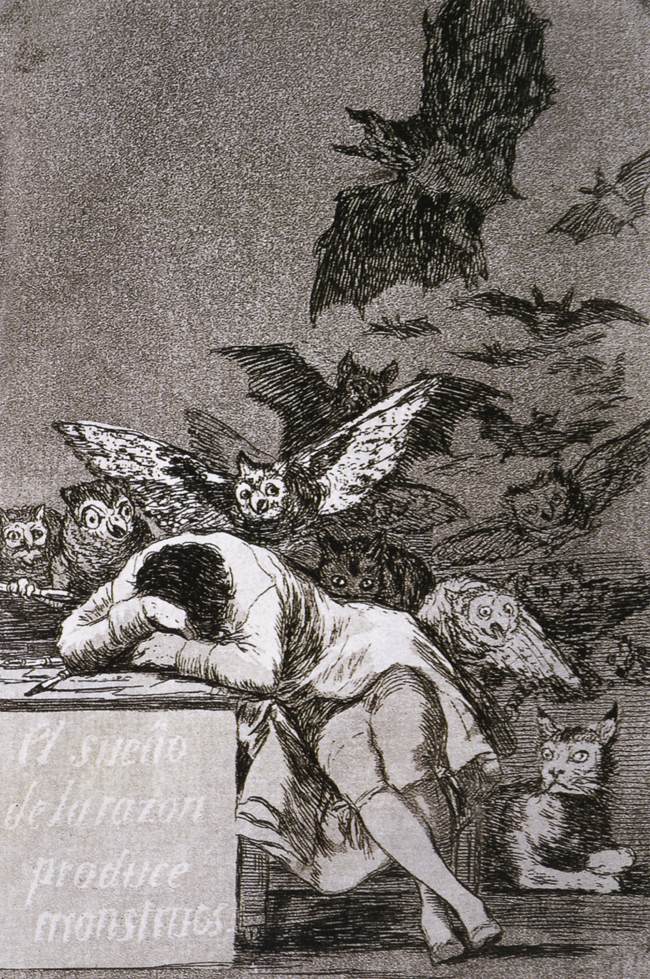 Johann Hari writing in the Independent on Monday appears to be rather enamoured of the enlightenment. The enlightenment philosophers argued that “instead of relying on divine revelation, we should closely observe the world around us and base a rational world-view on the empirical evidence we gather.” This is, so Hari believes, a truly wonderful vision. Those who oppose it like the Chapmans, whose work Hari rightly deplores, are basically in league with the “fascists and priests” who have sort to puncture and destroy it for the past 300 years. So unequivocal is Hari’s enthusiasm that he confidently declares that “Everything good about our world … comes from this project”.
This leads him to dismiss “post-modern” philosophy, of which the Chapmans work is apparently the “pure expression”. According to Hari “When you strip away our Enlightenment defences against psychosis” all you are left with is “immoral anger, celebrating injustice and cruelty as ‘transgression’”. This raises a number of questions. Can enlightenment thought really be neatly separated from all the bloody revolutions, fascisms, imperialisms and totalitarianisms that were a feature of modernist Europe? Was it really Hitler’s failure, as Hari seems to suggest, to “scrupulously adhere to fact, evidence and reason-based inferences” that produced the Nazi monster?
Hari is obviously not aware of the thesis of the dialectic of enlightenment where instrumentalized reason becomes irrational. Nor does he seem to realize that the kind of faith in facts and empirical evidence that he so applauds in enlightenment thought actually undermines his own moral critique of post-modernism. David Hume divorced facts from values and A.J.Ayer's philosophy of “scrupulous adherence to fact, evidence and reason-based inferences” led to the claim that moral judgements are strictly meaningless – a bit of a pain if you want to condemn the torture and destruction of human life.
So while Hari is right to criticise the facile rejection of the enlightenment expressed in the Chapmans work, he would do well temper his rather extravagant faith in the facts alone.
Speaking from Faith in Democracy
Jonathan Chaplin's inaugural lecture for the Kirby Laing Institute "Speaking from Faith in Democracy" is now available on-line.
Friday, February 09, 2007


Ice Day?
No photos today, as I don't seem to be able to find any ice. Nevertheless, arriving at school this morning fully equipped with my football kit for the customary Friday-after-school game, I was rather surprised to find the gates all locked and notices that the dangerous icy conditions meant the school was closed.
Thursday, February 08, 2007
Snow day!

School was closed today due to snow, Hurrah! It doesn't take much to disrupt life here in London.
Wednesday, January 31, 2007
Some Links
Joel Hunter on Derrida here.
Gideon Strauss has an excellent piece on postmodernism here.
Richard Mouw has just started to blog.
Macht on Emergent Properties, Abstraction and Reductionism.
And some study guides on Dooyeweerd’s :
Christian idea of the state ,
Twilight of Western Thought,
Roots of Western Culture ,
and New Critique.
So there are no excuses now!
Gideon Strauss has an excellent piece on postmodernism here.
Richard Mouw has just started to blog.
Macht on Emergent Properties, Abstraction and Reductionism.
And some study guides on Dooyeweerd’s :
Christian idea of the state ,
Twilight of Western Thought,
Roots of Western Culture ,
and New Critique.
So there are no excuses now!
Tuesday, January 30, 2007
"In my judgement ..."
I read a comment the other day in a weekly that noted how politicians often use phrases that ‘real people’ never use. One of the examples given was “In my judgement …”. The comment was obviously put critically while not offering any actual critique. Perhaps the implication was that such an opening to a sentence unduly inflated the statement which followed.
Whatever the un-stated reason for the writer’s antipathy, I want to suggest, in contrast, that we (‘real people’) start using this little phrase more. It should be brought in for the far more popular “in my opinion …” which is caught in an unhappy paradox. First off the statement acquires an unchallengeable, absolute status; you may dislike or reject my opinion, but you can’t criticise it. Any attempt to offer criticism can be dismissed as merely your opinion. In other words the paradoxical other side of the coin is the sheer relativity of opinion. The result is that “my opinion” escapes any responsibility precisely because it is mine, and over what is mine, so the liberal assumption goes, you can have no say. Giving ones judgement suggests that your point is being made after some thought which could be challenged, revised or rejected. It deliberately puts ones views under the scrutiny of others, exactly where politicians, but also ‘real peoples’ views should be. Opinions, on the other hand, are private affairs; while you are free to reject them and have your own, it is in bad taste to challenge them and suggest they might be wrong.
It seems to me that a good start in combating the almost ubiquitous relativism that characterises modern liberal societies would be to start taking responsibility for the claims we make by prefacing them with “in my judgement …”
Whatever the un-stated reason for the writer’s antipathy, I want to suggest, in contrast, that we (‘real people’) start using this little phrase more. It should be brought in for the far more popular “in my opinion …” which is caught in an unhappy paradox. First off the statement acquires an unchallengeable, absolute status; you may dislike or reject my opinion, but you can’t criticise it. Any attempt to offer criticism can be dismissed as merely your opinion. In other words the paradoxical other side of the coin is the sheer relativity of opinion. The result is that “my opinion” escapes any responsibility precisely because it is mine, and over what is mine, so the liberal assumption goes, you can have no say. Giving ones judgement suggests that your point is being made after some thought which could be challenged, revised or rejected. It deliberately puts ones views under the scrutiny of others, exactly where politicians, but also ‘real peoples’ views should be. Opinions, on the other hand, are private affairs; while you are free to reject them and have your own, it is in bad taste to challenge them and suggest they might be wrong.
It seems to me that a good start in combating the almost ubiquitous relativism that characterises modern liberal societies would be to start taking responsibility for the claims we make by prefacing them with “in my judgement …”
Monday, January 22, 2007
Grace Church Lectures
At Grace Church people are encouraged to give lectures on areas where they have some interest or expertise. Next Sunday 28 January 7.30pm Dr James May will give a lecture on "The God Delusion: Is Richard Dawkins right?" It will last Approx 1hour including time for questions.
Previous lectures have covered topics such as the "history of conflict" between science and Christianity, bio-ethics and obscure indie bands. You can find an example on-line by Tim Murray, who runs the Film Club, his lecture was titled “Is Hollywood’s Art in the right Place”. Hopefully there will be a lecture on the reformational worldview in the not too distant future.
The relationship between individuals and society
I have started to look at Mill's arguments in On Liberty with my philosophy students, and to set some context we looked at three views on the relationship between individuals and society: Individualism, Collectivism and Pluralism. Here's how I outlined each view:
Individualism makes the individual the basic unit of society. This is based on a view of the individual as essentially independent and self-sufficient and so takes the social dimension of being human as secondary. Individualists argue that society could not exist without individuals and so individuals are more basic than society. Individualism has contributed greatly to a sense of the importance and uniqueness of each person, yet each person is not fundamentally alone but is rather always involved in a web of social relationships. Individuals are always parents/children, students/teachers, sellers/buyers, employers/employees etc.
Collectivism in contrast emphasises the organic wholeness of society, and tends to see one institution (usually the state) as the most essential expression of the unity of the whole. Collectivists argue that individuals could not survive without society. Individuals are merely parts of the whole, and the "lesser" institutions are subgroups that only have a purpose in the way they support the primary unifying institution. Collectivism emphasises the need for belonging, and for working together for the benefit of everyone, however it is also prone to disregard the views of dissident individuals, and tends to obscure the identity and integrity of the many different social structures that coexist with the state.
Pluralism is no mere compromise between these two views for it adds an important reality, that of a plurality of associations and institutions. Pluralism holds that neither the individual nor society can exist without the other, both exist in co-dependence. This view against individualism denies that there are pure isolated individuals because each person always stands in a variety of social relations. Against collectivism it denies that there is an all embracing social structure. Instead it recognizes that there are different institutions with their own distinct identity and sphere of influence, authority and responsibility. With individualism it accepts that these institutions are made up of individuals and with collectivism it agrees that the state plays an important role in balancing the interests of the various institutions. In pluralism there are no individuals totally outside of such structures however marginalized, nor does the state have either the authority or responsibility to fulfil the functions unique to each institution.
Sunday, January 14, 2007
Blair on air travel and climate change
This is a little old now, but still worth commenting on. Tony Blair is not willing to give up his long-haul flights. Here is the reason why:
Britain is 2% of the world's emissions. We shut down all of Britain's emissions tomorrow - the growth in China will make up the difference within two years. So we've got to be realistic about how much obligation we've got to put on ourselves. The danger, for example, if you say to people 'Right, in Britain ... you're not going to have any more cheap air travel,' everybody else is going to be having it. So you've got to do this together in a way that doesn't end up actually putting people off the green agenda by saying you must not have a good time any more and can't consume. All the evidence is that if you use the science and technology constructively, your economy can grow, people can have a good time, but do so more responsibly.
I think that James Skillen’s comments on international justice in 1975 have relevance to this attitude. Skillen wrote:
The ready reply that such a thing will never happen, given modern nationalism and human selfishness in general, can only have the value of warning us that the world's doom is certain. One who believes that the pragmatic response of "It isn't possible" can itself serve as a norm for "realistic" action is only fooling himself. Any pragmatic effort to "work with" national, self-interested politics puts itself in the service of that nationalism and can lead only to the deadend of injustice
The hope that market mechanisms together with science and technology will fix the problems of climate change is a dangerous faith that fosters the avoidance of responsibility, "we don't have to worry or change our way of life, the scientists will fix things", while fatalistically accepting the status quo.
I should point out, or perhaps confess, that I take regular trips by plane to Italy to visit my in-laws. So the point is not to make a moralistic, and possibly hypocritical, judgement on the Blair's lifestyle. We all have reason to reflect and confess out failings with regard to our lack of stewardly living. Instead the point is to question the pragmatic and responsibility evading self justification. My own feeble attempt to reduce the amount of meat I eat is not to off-set the flights to Italy, nor the growing energy consumption of China! God has not tasked me with saving the world, just to love mercy, justice and to walk humbly before God.
Wednesday, January 10, 2007
Chaplin on Liberalism and Toleration: Part Two
As mentioned in the previous post Chaplin focuses on situations where student groups on university campuses affiliated to the student associations have been disaffiliated on the basis of discrimination due to their position on homosexual relations. The "individualistic regime of tolerance" would put racial discrimination and discrimination against homosexuals on the same level, however Chaplin demurs:
those who place racial identity and views on sexual morality in the same category are simply not comparing like with like. As a biologically determined trait, racial identity is wholly outside someone's choice, while also being profoundly implicated in someone's social identity. This is the basic reason why we have rightly come to insist that racial discrimination is arbitrary. Views of sexual morality, by contrast, are elective: we adopt them, either through individual choice or by remaining within a community that upholds them. And for some, the views they hold on this question are profoundly connected to their own moral or religious identity, such that being required to suspend or disavow them is experienced as deeply compromising.
Unfortunately Chaplin has himself failed to compare like with like. He compares race, the object of discrimination, as a biologically determined trait, not with homosexuality, but with “views of sexual morality”. Chaplin should have compared views on race with views on sexual morality, or, race and homosexuality themselves. If he compared the latter the immediate question would be is homosexuality “a biologically determined trait” or at least akin to such a trait (i.e. not merely a free lifestyle choice). This seems to be one of the key points at issue.
The issue has again been in the news with the new "Sexual Orientation Regulations" which form part of the Equality Act 2006 just come into force in Northern Ireland and to be law in the rest of the UK later this year. There have been protests outside Parliament, mainly made up of Christians. Those against the new law have opposed it on grounds of the conscience and free speech of Christians and others who object to homosexual practice, with a distinction drawn between homosexuals and homosexual practice. The first should not be disciminated against, but Christians want the freedom to refuse providing services to homosexuals that would condone homosexual practice. The example given is that of Christian Hotel refusing to provide a room to a homosexual couple.
In response to these kinds of arguments Lord Smith said: "I am somewhat puzzled by the arguments that have been advanced. It seems to me, in my simplistic way, that what they (the opponents of the regulations) are arguing for is quite simply the right to discriminate and the right to harass. And those arguments are being made in the name of Christianity."
What this suggests is that Chaplin still needs to present an argument to explain why “those who place racial identity and views on sexual morality in the same category are simply not comparing like with like”.
Saturday, January 06, 2007
Chaplin on Liberalism and Toleration: Part One
Comment have been running a series on “living with liberalism”. A recent piece is by Jonathan Chaplin’s who discusses liberalism and the issue of tolerance. Halfway through his discussion he makes an interesting suggestion:
A hypothesis worth pursuing (further than I can here) is that the new liberal regime is expanding its remit at the same time as—and perhaps because of—its decreasing capacity to deliver the wide-ranging social services it used to think of as essential to its mandate. If there is truth is this, the irony is rich: as liberal states, under pressures from increasingly globalized economic exchanges, are less and less able or willing to resist the progressive marketization of civil society, and the consequent dismantling of their welfare systems, they simultaneously pursue the progressive politicization of civil society. As the power to restrain business corporations slips through their fingers—indeed, as they all too willingly cede it—they grab hold ever more jealously of the reins of voluntary associations, which are easier targets. A diagnosis of this new apparent twist in the pathology of late modern liberal states awaits.
Part of this politicization of civil society is the “monopolistic enforcement of an individualistic regime of tolerance”. What this means is that "arithmetical equality, understood as identical treatment for individuals across a wide range of institutional practices within all societies" is given priority with no, or little, concern for the internal beliefs and purposes of diverse associations. That means that associations are not given freedom to set their own limits to tolerance within their sphere of action and competence. This is a problem because there has to be differently set limits to tolerance within different societal spheres. Parents, teachers and leaders of political parties have to set different limits to toleration for their children, students and cabinet members, limits that may be inappropriate in different contexts.
To illustrate the inappropriate enforcement of an individualistic regime of tolerance Chaplin focuses on situations where student groups on university campuses affiliated to the student associations have been disaffiliated on the basis of discrimination due to their position on homosexual relations.
Yesterday a similar issue hit the news here in the UK. In my home town of Exeter the Christian Union (which has now been “democratically” forced to change its name to the Evangelical Christian Union) has been suspended from the student guild and had a bank account frozen (see here and here). Not on the basis of a position taken on homosexual relations, but because members are asked to sign a statement of belief in Jesus as their God and saviour and officials to sign a more comprehensive statement of belief.
The declaration which members have to sign includes the phrase: "In joining this union, I declare my faith in Jesus Christ as my Saviour, my Lord and my God". The Guild of Students President Jemma Percy said the requirement to sign the declaration meant "participation in the society was not open to every student".
This is clearly a case where the individualistic regime of tolerance has over stretched itself to the point of self-contradiction, undermining freedom of association.
Petition Blair
There is a new way of petitioning Prime Minister Blair called e-petitioning . I discovered this through a “rule of law” petition set up by Alan Storkey saying “We the undersigned petition the Prime Minister to observe the rule of law by reinstating the BAE- Saudi Arabia criminal investigation by the SFO”.
Among the most popular petitions are:
"We the undersigned petition the Prime Minister to scrap the proposed introduction of ID cards."
and
"We the undersigned petition the Prime Minister to champion the Nuclear Non-Proliferation Treaty, by not replacing the Trident nuclear weapons system."
Monday, January 01, 2007
Launch of New Institute

This summer Jonathan Chaplin left his position at the Institute for Christian Studies in Toronto to become director of the Kirby Laing Institute for Christian Ethics in Cambridge, England. The institute is having its official launch on 24th January with Chaplin giving his inaugural leture ‘Speaking From Faith in Democracy’. Despite Cambridge being a simple train journey from where I live in London, 5pm on a Wednesday is not possible. I hope that future events may be at a more workable time.
Happy New Year!

Well it's been over a month since I last blogged, so it only seems appropriate to start the new year with a post. I certainly won't be revealing all my new years resolutions. However one that I have made is to try and reduce my ecological footprint (see here to find out yours). Since I don't drive a car there appear to be two main possibilities. One is to stop visiting my in-laws in Italy by plane, the other is to reduce the amount of meat I eat. I have decided to go for the second. Since I eat a fair amount of meat it will be both hard but possible. I know it probably sounds obvious but rather than cutting meat out of my diet I intend to increase the amount of vegetarian meals I eat and enjoy. Any suggestions welcome.
Subscribe to:
Posts (Atom)